Importance of Gray Childcare
1. Positive effects on socialisation
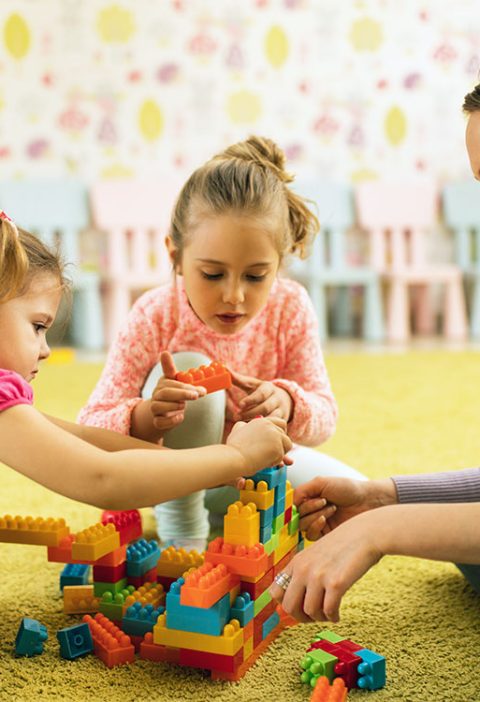
Attending a quality educational Gray childcare service also helps toddlers develop their social skills. This offers the opportunity to interact with other children in a group. Gray childcare is, therefore, a place where children can learn to live in a group.
In a quality Gray childcare setting, the teachers help children, for example, to bond with others (e.g. say hello, make bye-bye), play together, share and settle small baffles.
In a child care centre in Gray, toddlers also learn to follow instructions and rules promoting group harmony, in addition to participating in different routines. It gives them a sense of security. In addition, this stability can have positive effects on their behaviour. When expectations are specific, clear and consistent, children are more likely to behave well because they know what is expected of them.
The quality of the relationship between the educator and the parent can also help prevent and quickly identify behavioural problems and put in place support and supervision measures. For example, when the teacher communicates her observations to parents about their child well, they can see together how to intervene at home and in the Gray childcare setting to improve behaviour.

2. Benefits for motor development
A few years ago, studies found that children did not move enough in their childcare and that they spent much of their time doing quiet, sedentary activities. For example, a Kensington study carried out in 2019 with 242 children in early childhood centres revealed that children were active on average 53 minutes per day. And only 13 of those 53 minutes were medium to high-intensity activities or games.
However, things seem to be changing. Teachers are encouraged to do more physical activity with their group so that the children move more. And that’s all the better because toddlers who move regularly in their Gray childcare environment discover their bodies and gain confidence in their abilities.
For example, when children play chases, obstacle courses, ball games, or when they are having fun on a scooter or tricycle, they exercise their balance, coordination, and endurance. They also strengthen their muscles, expend energy and release small tensions.
Here are some conditions that promote the motor development of children in a Gray childcare setting:
- Promote free play.
- Take the children outside every day.
- Have teachers themselves active.
- Plan several times in the day when children can play actively (e.g., run, jump, climb, dance);
- Children tend to be more active when they play outside and decide for themselves.
- Provide children with versatile and diversified equipment that makes them move (balls, balloons, tricycles, scooters, hoops, etc.);
- Transform the moments of routine and transition into active games (e.g., go to wash your hands at the sink by walking on your heels or by jumping);
- Set up premises for physical activity;
And fine motor skills?
Yes. Several activities offered to toddlers in educational Gray childcare promote their fine motor skills. This is the case with puzzles, drawings and crafts. Routines are also opportunities to exercise fine motor skills in children, for example, when they wash their hands, set up their mattress for a nap or tie their coat. It’s the same with games. When toddlers have fun picking up rocks or making marks in the sand with their fingers, they develop fine motor skills. All this gradually prepares them to hold a pencil, which will help them later for school.